
[VIDEO]
Bridging the Gap: How Research Operations could be the answer to Integrating UX Research onto Agile Product Teams

UX Research and Agile product teams often struggle to integrate seamlessly, leading to inefficiencies and overlooked insights. In this video, I explore the pivotal role of Research Operations in enabling a smoother, more effective integration by standardizing processes, improving collaboration, and ensuring research drives product decisions.
[ARTICLE]
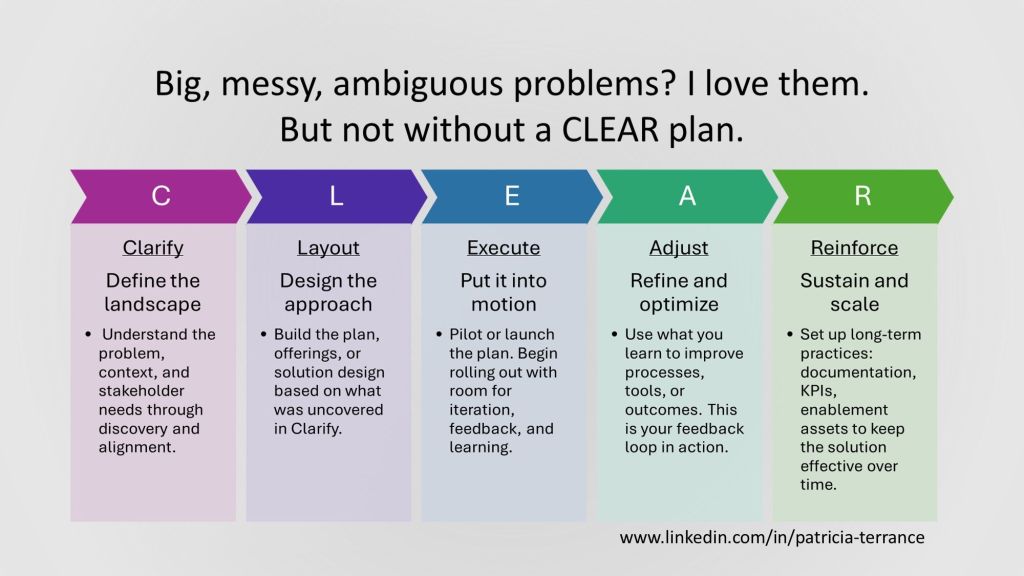
Over time, I’ve developed a reliable blueprint I use to move from complexity to clarity, no matter the industry, maturity level, or team size.

I didn’t invent a brand-new method. I simply captured a repeatable, flexible structure that I’ve seen consistently work across engagements, industries, and teams. This 5-phase blueprint is not revolutionary. It is foundational.

I use a toolkit that I have created for each phase with varying tangible assets and workflows. This is how I marry alignment and adaptability. Structure doesn’t have to mean rigidity!

In fact, THIS structure enables creativity, stakeholder alignment, and contextual nuance without chaos.

The beauty of this framework is how much room it leaves for customization. Even if the people, needs, and content vary, this model gives you a grounded starting point. You can flex the content, the methods, and the level of depth depending on the context, all while staying aligned.
[ARTICLE] [VIDEO]
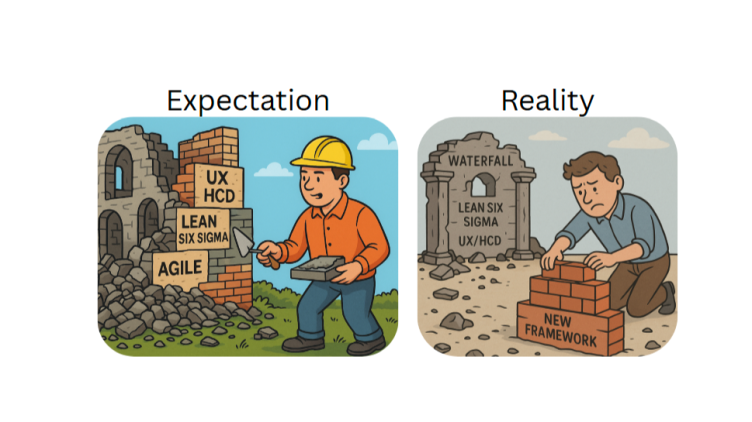
Waterfall was too slow. Lean was too cold. UX was too dreamy. Agile is too chaotic.

So, what’s just right?

We’re still figuring that out.

Let’s take a look at how many ways-of-working, like Waterfall, Lean Six Sigma, UX, Agile, and Continuous Discovery, tend to follow a familiar cycle: Early adoption and rising popularity, then peak adoption and popularity, then finally declining popularity and eventual replacement.

[VIDEO]
I created this piece while reflecting on how distance, pace, and structure quietly shape our relationships at work. It’s a personal story about the subtle ways disconnection can develop over time, often without anyone realizing it in the moment.

As someone who works across disciplines and spends much of my time thinking about experience, communication, and alignment, this perspective continues to feel relevant. Connection requires intention; not just proximity, process, or frequency of interaction.
 UX Research Consulting & Experience Strategy